Blood Sugar and Perimenopause: What to Eat on a Workday (No CGM Needed)
By Jessica Corwin, MPH, RDN, NBCHWC
By Jessica Corwin, MPH, RDN, NBCHWC — Registered Dietitian Nutritionist specializing in midlife women's health.
If You've Ever Thought…
"Why am I crashing at 3pm?"
"Why do I feel shaky if I skip lunch?"
"Why does wine hit me differently now?"
Welcome to perimenopause, where blood sugar regulation becomes a little more sensitive… and a lot more important.
The good news? You do not need a continuous glucose monitor to stabilize your blood sugar. You need structure, protein, fiber, and rhythm.
Let's break it down.
Why Blood Sugar Feels Trickier in Perimenopause
During perimenopause, estrogen and progesterone fluctuate unpredictably. Estrogen supports insulin sensitivity. When it becomes erratic, blood sugar swings can feel more dramatic.
Add in:
- Poor sleep - High stress - Skipped meals - Under-eating protein - More reliance on quick carbs
And suddenly you're on the blood sugar roller coaster.
As described in The Menopause Book, midlife hormonal shifts influence metabolism, mood, sleep, and body composition. Blood sugar is one of the quiet players connecting all of these.
When blood sugar is steady, women often notice:
- Fewer cravings - More stable energy - Better focus - Less irritability - Improved sleep
This is not about perfection. It's about preventing dramatic peaks and crashes.
Blood Sugar 101 (Without the Biohacking)
Think of your body like a hybrid car.
Carbs are fuel. Protein and fiber are the brakes and stabilizers.
If you eat carbs alone, the system revs high and drops fast. If you pair carbs with protein and fiber, the rise is slower and steadier.
The goal is not low-carb. The goal is clothed carbs.
A Simple Workday Framework
Here's what balanced blood sugar can look like on a busy workday.
Breakfast: Anchor the Morning
Aim for 25 to 30g protein + fiber.
Instead of: Toast + coffee
Try:
- Greek yogurt + chia + berries - Eggs + sautéed greens + whole grain toast - Protein smoothie with nut butter + frozen berries
Why it matters: Cortisol is naturally higher in the morning. A protein-rich breakfast helps buffer stress hormones and prevent mid-morning crashes.
Lunch: Prevent the 3pm Crash
Aim for protein + fiber + healthy fat + smart carbs.
Example:
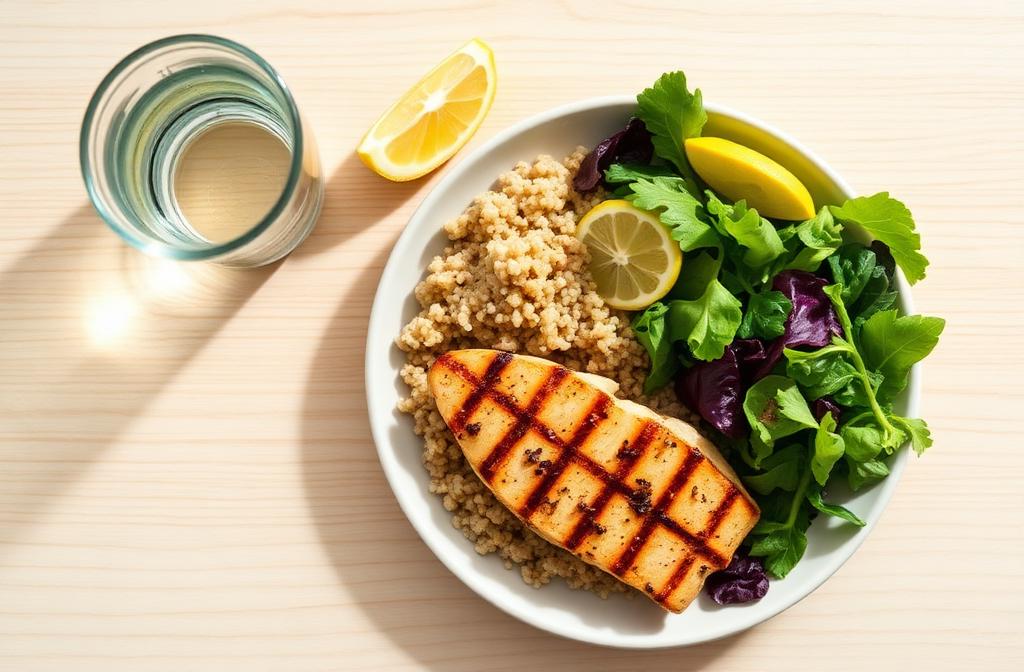
- 4 oz grilled chicken - ½ cup quinoa or lentils - Mixed greens - Olive oil + lemon
Or:
- Leftover salmon - Roasted vegetables - Sweet potato
Skipping lunch or eating just a salad with minimal protein is one of the most common triggers for afternoon sugar cravings.
Snack (If Needed): Strategic, Not Reactive
If there's more than 4 hours between meals, add a protein-forward snack.
- Apple + 2 tbsp peanut butter - Cottage cheese + berries - Handful almonds + yogurt
Snacks should stabilize, not spike.
Dinner: Steady, Not Restrictive
Dinner should not be your only real meal.
Include:
- Protein (4 to 5 oz) - Vegetables - Fiber-rich carb (beans, whole grains, potatoes) - Healthy fats
Balanced dinners often improve sleep because they reduce nighttime glucose dips.
Common Workday Blood Sugar Mistakes
- Coffee-only mornings
- Salad lunches with minimal protein
- Long stretches without eating
- "Naked carbs" (fruit alone, crackers alone)
- Under-eating all day → overeating at night
Perimenopause amplifies these patterns.
What About Added Sugar?
You don't need zero sugar. But keeping added sugar moderate helps reduce spikes.
A helpful guideline: Keep added sugar under about 25g per day on most days.
Not because sugar is "bad." But because frequent spikes create bigger crashes in midlife.
Lifestyle Tweaks That Matter
Blood sugar isn't only about food.
- A 10-minute walk after meals improves glucose handling.
- Strength training increases insulin sensitivity.
- Sleep deprivation increases glucose variability.
- Chronic stress raises blood sugar independently of food.
This is a whole-system conversation.
As emphasized in Food for Menopause, menopause nutrition is not about restriction. It's about supporting the body's changing physiology with steady, nutrient-dense meals.
You Don't Need a CGM
Continuous glucose monitors can offer data. But you can learn a lot by asking:
- Am I energized or crashing? - Am I shaky, irritable, or foggy? - Am I ravenous at night?
Your body is already giving feedback.
The Workday Reset
For the next week:
- Eat within 1 to 2 hours of waking. - Include protein at every meal. - Don't go more than 4 hours without eating. - Take a 10-minute walk after lunch when possible.
Notice what shifts.
In perimenopause, blood sugar stability isn't about dieting. It's about building rhythm.
And rhythm is what busy moms need most.
Frequently Asked Questions
Do I need a CGM to manage blood sugar in perimenopause? No. Most women can stabilize blood sugar by eating adequate protein at each meal, pairing carbs with fiber and fat, and eating at consistent intervals. Body feedback — energy, mood, cravings — is valuable data.
Why do I crash at 3pm during perimenopause? Skipping breakfast or eating a low-protein lunch leaves your blood sugar unsupported. By mid-afternoon, hormonal fluctuations plus glucose instability create the classic crash-and-crave cycle.
What should I eat for breakfast to stabilize blood sugar? Aim for 25–30g protein plus fiber. Greek yogurt bowls, egg scrambles with greens, or protein smoothies are practical options.
Does wine affect blood sugar differently in perimenopause? Yes. Alcohol can lower blood sugar initially, then cause a rebound spike. Combined with declining insulin sensitivity in perimenopause, this can amplify next-day cravings and fatigue.
Weekly Midlife Nutrition Clarity
Join the newsletter for evidence-based insights on protein, blood sugar, hormones, and midlife wellness — plus get the free Midlife Reset Checklist.
Want help building your own workday eating framework? Book a consultation and let's make it fit your life.